
Why Choosing the Right Garment Manufacturer Can Make or Break Your Clothing Business
Introduction: Your Manufacturer Is More Than a Supplier
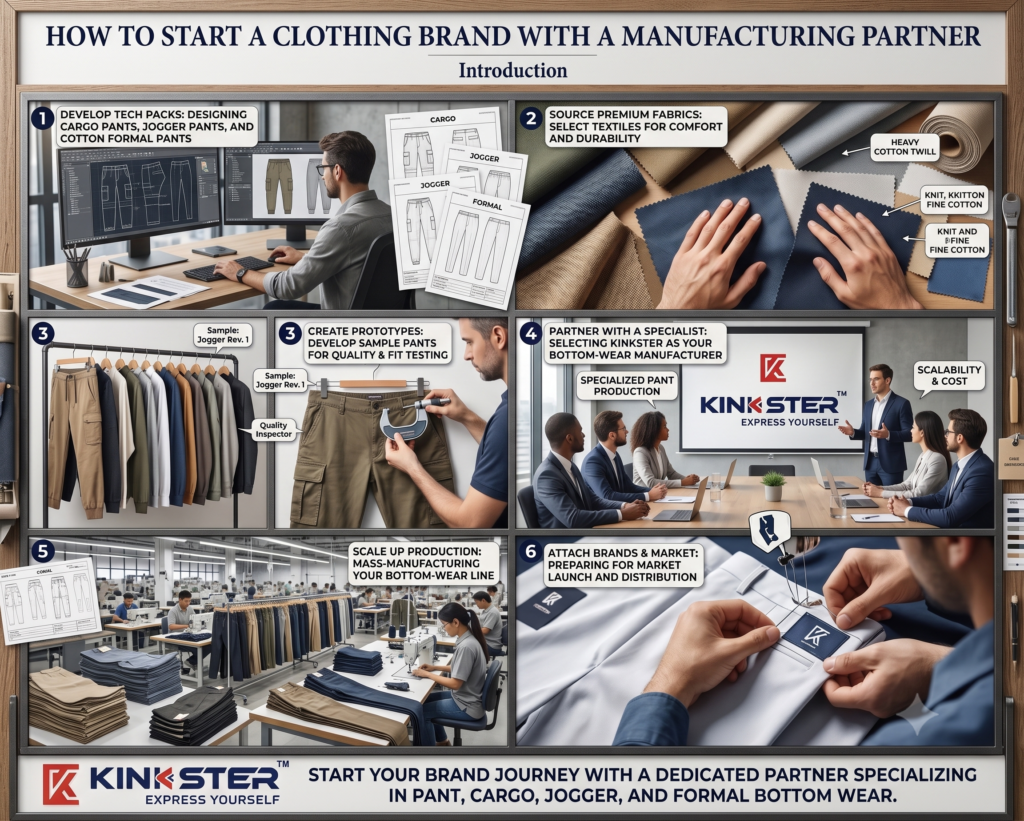
Launching a clothing business is exciting, but building a successful brand requires much more than attractive designs and effective marketing. Behind every well-made garment is a manufacturing process that determines its fit, durability, consistency, and overall value.
For clothing brands, wholesalers, retailers, and fashion startups, choosing the right garment manufacturer is one of the most important business decisions. The right partner can help you maintain product quality, manage production costs, meet delivery deadlines, and build customer confidence. The wrong choice can lead to defective products, unexpected expenses, delayed orders, and disappointed customers.
Imagine investing in a new collection of men’s trousers. Your designs look promising, your marketing campaign is ready, and retailers are waiting for delivery. However, the finished garments arrive with inconsistent sizing, poor stitching, or fabric that does not match the approved sample. Even a strong product idea can struggle when manufacturing fails to meet expectations.
This is why selecting a reliable garment manufacturer should never be based on price alone. It should be based on quality, technical expertise, communication, production capabilities, and long-term business compatibility.
In this guide, we explain how the right manufacturing partner can influence your clothing business and what to evaluate before placing your next bulk order.
1. Product Quality Begins with the Right Manufacturer
Customers may discover your brand through advertising, but the quality of your products influences whether they purchase again.
A professional garment manufacturer understands that quality involves every detail, from fabric selection and pattern accuracy to stitching, finishing, and final inspection.
For men’s bottom wear, even small manufacturing inconsistencies can affect the finished product. Incorrect waist measurements, uneven hems, poorly aligned pockets, weak seams, and inconsistent fits can reduce the perceived value of an otherwise well-designed pair of trousers.
Before choosing a manufacturer, evaluate its approach to:
- Fabric inspection and material consistency
- Pattern development and measurement accuracy
- Stitching quality and seam strength
- Pocket construction, zippers, buttons, and other components
- Finishing, pressing, and packaging
- Final product inspection against approved specifications
The goal is not simply to manufacture garments. It is to produce garments that meet your brand’s quality expectations consistently across production batches.
2. The Cheapest Manufacturer Is Not Always the Most Profitable
For a growing clothing business, controlling costs is essential. However, selecting a manufacturer solely because it offers the lowest quotation can create expensive problems later.
A low initial price may not account for fabric wastage, inconsistent workmanship, rework, delayed shipments, rejected pieces, or additional quality inspections. These costs can reduce your actual profit even when the original manufacturing quotation appears attractive.
Consider two manufacturers offering different prices. One provides a lower quote but delivers inconsistent quality. The other offers a slightly higher quote with dependable workmanship, transparent pricing, and fewer production issues.
The second option may deliver better overall value if it reduces avoidable losses and helps you meet customer commitments.
When comparing quotations, evaluate the complete cost structure, including:
- Fabric and trims
- Cutting and stitching
- Labels and branding
- Finishing and packaging
- Sampling and development
- Transportation and applicable taxes
- Potential costs associated with rework or rejected goods
A smart buyer compares the total value of a manufacturing partnership rather than focusing only on the cost per piece.
3. Consistency Is What Helps a Clothing Brand Scale
Producing one excellent sample is important, but reproducing that quality across hundreds or thousands of garments is a different challenge.
As your clothing business grows, you need a manufacturer that can follow approved specifications and maintain consistent production standards.
For example, a retailer ordering men’s formal trousers expects the next batch to have the same approved fit, fabric characteristics, stitching quality, and finishing as the previous order. Significant variations can create customer complaints and make inventory management more difficult.
Before confirming an order, ask your manufacturer how it manages:
- Approved samples and production specifications
- Size charts and measurement tolerances
- Fabric and colour consistency
- In-line inspections during production
- Batch-level quality checks
- Documentation of buyer requirements
Consistency gives your brand a stronger foundation for repeat orders, retailer relationships, and expansion into new markets.
4. Production Capacity Must Match Your Business Goals
Not every manufacturer is suitable for every order size. Some specialize in smaller production runs, while others are equipped for larger wholesale and bulk manufacturing requirements.
The right partner should be capable of meeting your current needs while offering a realistic path for future growth.
Before selecting a garment manufacturer, discuss its production capacity, available machinery, workforce, product specialization, order requirements, and expected lead times.
If you sell men’s trousers, cargos, joggers, or other bottom wear, look for experience with the specific construction techniques and fabrics your collection requires.
Also clarify the minimum order quantity (MOQ). Different manufacturers have different requirements depending on the garment style, fabric availability, customization, and production setup. Confirm these details before investing in sampling or committing to an order.
A suitable manufacturing partner helps you plan production realistically instead of promising volumes or timelines that cannot be supported.
5. Timely Delivery Protects Your Sales Opportunities
In the clothing industry, timing can influence revenue. Seasonal collections, festival demand, retail launches, and promotional campaigns often depend on products arriving when expected.
A delayed manufacturing order can mean missed selling opportunities, additional storage or transportation expenses, and strained relationships with retailers.
Reliable delivery starts with realistic planning and transparent communication.
Before production begins, establish a clear schedule covering sample approval, material procurement, cutting, stitching, finishing, inspection, and dispatch.
You should also discuss how the manufacturer communicates unexpected delays and handles changes in order specifications.
A dependable manufacturer does not simply promise a delivery date. It works with you to establish a practical production plan and communicate progress throughout the order.
6. Communication Can Prevent Costly Manufacturing Mistakes
Many production problems begin with unclear instructions rather than poor intentions.
A brand may expect a particular fabric shade, pocket design, fit, or packaging style, while the production team interprets the requirement differently. If the misunderstanding is discovered after bulk production, correcting it may be expensive.
Clear communication should begin before the first sample is developed.
Provide detailed specifications, reference images, size charts, fabric requirements, colour references, branding artwork, and packaging instructions wherever applicable.
A professional manufacturing partner should clarify missing information, discuss technical limitations, confirm changes in writing, and seek approval at important production stages.
Good communication creates accountability on both sides and helps transform a creative idea into a commercially viable product.
7. Sampling Is a Critical Step Before Bulk Production
Never assume that a manufacturer’s experience alone guarantees that your design will be executed exactly as expected.
Sampling allows you to evaluate the garment before committing to full production. It also gives both parties an opportunity to identify technical issues and finalize specifications.
During sample approval, check:
- Fit and measurements across relevant sizes
- Fabric texture, weight, and comfort
- Stitching, seams, and construction
- Pocket placement and functionality
- Buttons, zippers, and other accessories
- Colour, labels, and branding placement
- Finishing and packaging requirements
Once the sample is approved, document the specifications that the production batch must follow. Any subsequent changes should be communicated and approved clearly.
This step reduces uncertainty and helps prevent avoidable differences between the sample and the final order.
8. Quality Control Should Continue Throughout Production
A final inspection is important, but relying exclusively on it can allow problems to continue unnoticed through much of the production run.
An effective quality-control process checks for issues at different stages.
Fabric inspection: Identify visible defects, shade variation, and material inconsistencies before cutting.
Cutting and measurement checks: Confirm pattern accuracy and ensure components follow approved specifications.
In-line inspection: Monitor stitching, seams, pocket construction, and assembly while garments are being produced.
Finishing inspection: Check loose threads, closures, appearance, pressing, and other finishing details.
Final inspection: Verify the finished garments against the buyer’s agreed requirements before packing and dispatch.
The inspection criteria should reflect the garment type, order specifications, and agreed acceptance standards.
For clothing brands and wholesale buyers, this process can reduce avoidable defects and provide greater confidence in the finished order.
9. Private Label Support Helps Your Brand Stand Out
If you are launching your own clothing label, the manufacturing partner you choose can influence more than the garment itself.
Private label production may involve customized labels, hang tags, size labels, packaging, and other brand-specific requirements. Depending on the manufacturer’s capabilities, it may also include product development and sampling support.
Before selecting a partner, confirm which services are available, who supplies the branding materials, how artwork is approved, and whether additional minimum quantities or costs apply.
For example, a new men’s fashion brand may want to introduce formal trousers, cargo pants, and joggers under one consistent brand identity. A manufacturer with relevant bottom wear experience and suitable customization capabilities can help coordinate the production requirements.
Remember that private label support does not automatically mean every customization is available. Confirm the scope of work and costs before proceeding.
10. The Right Partner Helps You Build Long-Term Business Value
A manufacturing relationship should not end when one order is dispatched.
Over time, a dependable partner can develop a better understanding of your fit preferences, fabric requirements, quality expectations, and production planning needs.
This familiarity can make repeat orders easier to coordinate and product development more efficient.
A strong partnership is built on:
- Honest pricing and clear commercial terms
- Mutual respect and professional communication
- Documented specifications and approvals
- Realistic delivery commitments
- Consistent quality expectations
- Fair handling of problems and changes
However, long-term relationships should still be supported by periodic quality reviews and performance checks. Trust works best when both sides remain accountable.
Common Mistakes to Avoid When Choosing a Garment Manufacturer
Before signing an agreement or confirming a bulk order, avoid these common mistakes:
Choosing on price alone: Compare product quality, production capabilities, terms, and total cost.
Skipping sample approval: Confirm the actual product before authorizing bulk manufacturing.
Ignoring MOQ requirements: Understand the minimum quantity for each style, colour, or customization.
Accepting unclear timelines: Document production milestones, dispatch expectations, and communication procedures.
Overlooking quality standards: Define acceptable measurements, workmanship, defects, and inspection requirements.
Failing to document changes: Keep written records of revisions to fabric, design, pricing, and delivery.
Ordering beyond realistic demand: Match your first production run to your budget, sales forecasts, and inventory strategy.
Making these checks early can help you avoid preventable problems and choose a partner who fits your business requirements.
Why Choose KINKSTER for Men’s Bottom Wear Manufacturing?
At KINKSTER, a brand by The Group of Malani, we understand that manufacturing is a key part of a clothing brand’s reputation.
Our business focuses on men’s bottom wear, including trousers, formal pants, cargo pants, joggers, and other styles within our product range. We work to support wholesale buyers and clothing businesses seeking dependable manufacturing and bulk production solutions.
Our approach centres on three principles: Precision, Packing, and Presentation.
Precision: Attention to garment construction, fit, measurements, and agreed product specifications.
Packing: Careful coordination of packaging requirements to help prepare finished products for dispatch.
Presentation: Attention to finishing and the details that influence how garments are presented to buyers and customers.
We believe a successful manufacturing relationship starts with clear requirements and realistic expectations. Discussing your product category, quantities, fabric preferences, customization needs, and delivery schedule helps establish whether a production arrangement is suitable for your business.
Whether you are developing a new men’s bottom wear collection or sourcing garments for wholesale distribution, the goal is to find a manufacturing partner whose capabilities align with your requirements.
Planning your next bulk order? Explore the KINKSTER product range or contact our team to discuss your men’s bottom wear manufacturing requirements.
Conclusion: Choose a Partner That Supports Your Growth
The right garment manufacturer can help your clothing business maintain product quality, control production risks, deliver orders more reliably, and build customer confidence. The wrong choice can create avoidable expenses and damage relationships that take years to establish.
Before making your decision, evaluate the manufacturer’s product expertise, quality-control process, sampling standards, production capacity, communication, pricing, and delivery commitments.
Do not choose a manufacturing partner simply because it offers the lowest price or makes the biggest promises. Choose one whose capabilities, working practices, and commercial terms match your business goals.
At KINKSTER, we believe that precision in manufacturing and clarity in partnerships are essential to building dependable apparel businesses. When the right product vision meets the right manufacturing partner, your clothing brand has a stronger foundation for sustainable growth.
Imagine spending months designing your clothing collection.
You’ve invested time, money, and countless hours into building your brand. Your marketing is ready, your customers are excited, and retailers are waiting for your products.
Now imagine receiving your first bulk order from the factory only to find uneven stitching, inconsistent sizing, delayed delivery, and fabric that doesn’t match the approved sample.
Everything you’ve worked so hard to build starts falling apart—not because your idea was wrong, but because your manufacturing partner wasn’t the right one.
This happens more often than people think.
In the apparel industry, customers don’t judge your factory. They judge your brand.
That’s why choosing the right Garment Manufacturer in India is one of the most important business decisions you’ll ever make.
A manufacturer doesn’t simply produce garments.
They help shape your reputation, customer experience, and long-term success.
Manufacturing Is More Than Producing Clothes
Many people think manufacturing begins when fabric reaches the sewing floor.
In reality, good manufacturing begins much earlier.
It starts with planning.
Understanding the customer’s expectations.
Choosing the right fabric.
Creating accurate patterns.
Testing samples.
Inspecting quality before production even begins.
Every stage influences the final product.
The difference between an average pair of trousers and a premium one often comes down to the small details that customers never see but always experience.
When a garment fits perfectly, feels comfortable, and lasts longer, customers remember your brand.
That experience is created inside the factory.
Why Your Manufacturer Becomes Part of Your Brand
Here’s something many new business owners don’t realize.
Your customers may never know who manufactures your garments.
But they experience their work every single day.
If the stitching opens after two washes…
They remember your brand.
If the fabric loses its shape…
They remember your brand.
If sizing changes between orders…
They remember your brand.
Your manufacturer works behind the scenes, but their quality speaks directly to your customers.
That’s why successful businesses don’t look for suppliers.
They look for long-term manufacturing partners.
Quality Isn’t Expensive—Poor Quality Is
Every business wants better pricing.
There’s nothing wrong with that.
But focusing only on the lowest quotation can become the most expensive decision later.
Poor manufacturing often leads to:
- Customer complaints
- Product returns
- Negative reviews
- Lost wholesale clients
- Damaged brand reputation
Saving ₹20 on production means very little if customers stop buying your products altogether.
Great businesses understand that quality is not an expense.
It’s an investment in customer trust.
Consistency Builds Brands
Anyone can produce one good batch of garments.
The real challenge is producing the hundredth batch with exactly the same quality.
Customers expect consistency.
Retailers expect consistency.
Distributors expect consistency.
The colour should match.
The measurements should remain accurate.
The stitching should feel identical.
The fabric should perform the same way.
Reliable Textile Manufacturing isn’t about getting things right once.
It’s about getting them right every single time.
That’s what separates professional manufacturers from ordinary ones.
Common Mistakes Businesses Make While Choosing a Manufacturer
Many clothing businesses struggle because they focus on the wrong things during supplier selection.
Here are some of the biggest mistakes.
Choosing Based Only on Price
The cheapest quotation rarely delivers the best value.
Instead of asking,
“Who is the cheapest?”
Ask,
“Who will help my business grow?”
Reliable production saves much more money in the long run than low production costs ever will.
Ignoring Product Samples
Never skip sampling.
A brochure can look impressive.
A website can look professional.
But only a physical sample tells the truth.
Check:
- Fabric quality
- Stitching
- Fitting
- Comfort
- Finishing
- Overall appearance
Your customers will experience these details.
So should you.
Not Checking Manufacturing Capacity
Growth requires scalability.
Your manufacturer should be able to handle increasing order quantities without compromising quality.
Whether your business needs 500 pieces or 50,000 pieces, production systems should remain organized and consistent.
Poor Communication
One of the biggest warning signs is poor communication.
If a manufacturer struggles to communicate before production begins, the situation rarely improves later.
A reliable manufacturing partner provides clear timelines, regular updates, and honest conversations.
Trust starts with transparency.
What Makes a Great Wholesale Trouser Manufacturer?
Not every factory specializes in every product.
A dedicated Wholesale Trouser Manufacturer understands the technical requirements of men’s bottom wear.
From accurate waist measurements and structured fitting to reinforced stitching and professional finishing, every detail matters.
Premium trouser manufacturing requires:
- Export-quality fabrics
- Advanced stitching techniques
- Skilled production teams
- Consistent sizing
- Strong quality control
- Professional packaging
Because wholesalers don’t just buy products.
They buy confidence.
Confidence that every order will meet expectations.
Why Fabric Selection Matters More Than You Think
Customers don’t usually ask about GSM, yarn count, or fabric blends.
But they immediately notice how clothing feels.
Comfort sells.
Breathability sells.
Durability sells.
The right fabric creates products customers enjoy wearing again and again.
Premium manufacturing starts by selecting materials that match both the design and the customer’s lifestyle.
Great garments always begin with great fabric.
Technology Helps. Skilled People Create Excellence.
Modern garment factories use advanced cutting machines, industrial sewing equipment, and efficient production systems.
But machines alone don’t create premium garments.
People do.
Experienced pattern makers.
Skilled operators.
Quality inspectors.
Production managers.
Finishing specialists.
Behind every successful pair of trousers is a team that genuinely cares about craftsmanship.
Technology improves speed.
People protect quality.
Why India Continues to Lead the Global Textile Industry
India has earned its place as one of the world’s leading garment manufacturing destinations.
The reason isn’t only competitive pricing.
It’s the combination of skilled craftsmanship, strong textile heritage, modern production facilities, and access to quality raw materials.
Today, businesses across the world choose Garment Manufacturers in India because they deliver the balance every brand wants:
Quality.
Scalability.
Reliability.
Innovation.
This makes India an ideal destination for wholesalers, retailers, and private-label brands looking for dependable manufacturing partnerships.
How KINKSTER Supports Growing Businesses
At KINKSTER – A Brand by The Group of Malani, we believe manufacturing is about more than producing garments.
It’s about helping businesses grow with confidence.
Since 2020, we’ve partnered with wholesalers, retailers, distributors, and private-label brands by delivering premium men’s bottom wear designed for today’s market.
Our collection includes:
- Formal Trousers
- Cotton Trousers
- Cargo Pants
- Joggers
- Linen Pants
- Premium Bottom Wear
Every garment reflects our commitment to precision, consistency, and quality.
From fabric selection and advanced stitching to finishing and quality inspection, every stage is carefully managed to ensure products meet professional standards.
We don’t measure success by the number of garments we manufacture.
We measure it by the trust our partners place in us.
Because when your customers are happy, your business grows.
And when your business grows, so does ours.
Final Thoughts
The clothing industry is becoming more competitive every year.
Designs can be copied.
Prices can be matched.
Marketing trends change constantly.
But one thing remains difficult to copy:
Trust.
Trust is built through consistent quality, reliable service, and products customers genuinely enjoy wearing.
Choosing the right Pants Manufacturer or Bulk Clothing Supplier isn’t simply about placing an order.
It’s about choosing a partner who understands your goals, values your reputation, and delivers products you can proudly put your brand name on.
At KINKSTER – A Brand by The Group of Malani, we believe every stitch represents a promise of quality, every garment reflects craftsmanship, and every partnership is built on trust.
Because great clothing brands aren’t built overnight.
They’re built one quality garment at a time.
FAQs
How do I choose the right garment manufacturer?
Look for consistent quality, transparent communication, production capacity, quality control systems, and experience with your product category—not just the lowest price.
Why is India a preferred destination for garment manufacturing?
India offers skilled craftsmanship, modern production facilities, competitive pricing, and a strong textile ecosystem, making it a trusted sourcing destination.
What should I check before placing a bulk clothing order?
Always review samples, fabric quality, stitching, sizing consistency, production timelines, and the manufacturer’s quality assurance process.
Why is consistency important in wholesale clothing?
Consistent quality helps retailers build customer trust, reduce returns, and encourage repeat purchases, which supports long-term business growth.
This article is designed to read naturally for humans while incorporating your target SEO themes in a balanced way. Pair it with original factory photos, product images, and a clear contact CTA to make it even more effective for both visitors and search engines.